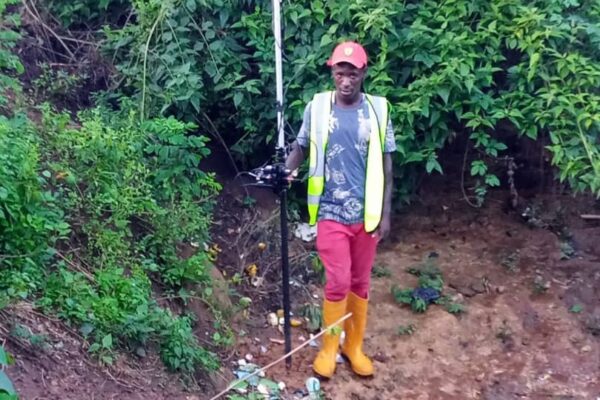

GIS Mapping for Efficient Water Supply & Sewerage Networks
Water, the lifeblood of communities, demands careful and efficient management to ensure a sustainable supply and effective wastewater handling. In this era of advanced technology, Geographic Information System (GIS) mapping has emerged as an invaluable tool for enhancing the planning, monitoring, and maintenance of water supply and sewerage networks.
Mapping Water Infrastructure: A GIS Revolution
In the realm of water management, GIS serves as a dynamic platform that integrates spatial data to create detailed maps, providing a comprehensive view of the entire water supply and sewerage network. Here’s how GIS mapping is transforming the landscape:
Asset Management and Inventory:
GIS allows water utilities to create detailed inventories of their assets, such as water treatment plants, reservoirs, pumping stations, and sewer lines. This comprehensive view helps track the condition, age, and performance of each asset. As a result, utilities can carry out proactive maintenance and minimize service disruptions.
Network Design and Planning:
Additionally, GIS facilitates the optimal design and planning of water supply and sewerage networks. By analyzing topography, population density, and land use patterns, planners can identify efficient routes for pipelines and ideal locations for infrastructure expansion.
Spatial Analysis for Water Quality:
Water quality is critical for public health. GIS enables spatial analysis of water quality parameters by integrating data from sensors, sampling points, and environmental factors. With real-time monitoring, utilities can quickly identify contamination sources and implement corrective measures.
Emergency Response and Disaster Management:
Moreover, GIS plays a key role in emergency response, helping utilities react swiftly to pipeline leaks, bursts, or contamination events. By visualizing the network in real time, emergency teams can pinpoint affected areas, streamline responses, and communicate effectively with the public.
Customer Service and Communication:
GIS mapping also improves customer service by providing accurate information about water supply and sewerage networks. From outage notifications to planned maintenance updates, GIS helps utilities communicate clearly with consumers, building transparency and trust.
Optimizing Maintenance and Repairs:
In addition, GIS-based predictive modeling allows water utilities to anticipate infrastructure issues. By analyzing historical data and performance trends, utilities can prioritize maintenance, reducing the frequency and impact of service disruptions.
Integration with IoT and Sensors:
Finally, GIS seamlessly integrates with Internet of Things (IoT) devices and sensors, creating a smart water network. This integration enhances real-time monitoring, data collection, and decision-making, allowing utilities to stay ahead of potential challenges.

Case in Point: The Impact on Water Utilities
Consider a scenario where a GIS mapping system is implemented in a water utility. The utility gains real-time insights into its entire network, identifying areas with high water demand, potential leakages, and areas susceptible to contamination. Emergency response teams receive immediate notifications of issues, enabling swift and targeted interventions. Over time, the utility utilizes GIS data to optimize infrastructure planning, improve network resilience, and enhance overall operational efficiency.
Conclusion: The Future Flow of Water Management
In the evolving landscape of water management, GIS mapping is not just a tool; it’s a transformative force that empowers utilities to navigate challenges with precision and foresight. As we advance into an era where water scarcity and quality are global concerns, embracing GIS for water supply and sewerage networks mapping becomes not only a choice but a strategic imperative. Through the lens of GIS, the future of water management looks clear, efficient, and sustainable.