
The world of surveying is rapidly evolving, driven by advances in technology and the growing need for accurate, efficient data. At the forefront of this transformation is Geospatial Research Ltd, leveraging Geographic Information Systems (GIS) to revolutionize how surveyors capture, analyze, and visualize spatial data.
What is GIS in Surveying?
GIS is a powerful tool that integrates hardware, software, and data to manage and analyze spatial and geographic information. In surveying, GIS bridges the gap between raw field data and actionable insights. With organizations like Geospatial Research Ltd leading the charge, GIS is becoming indispensable for urban planning, environmental management, and infrastructure development.
Key Applications of GIS in Surveying
- Land Parcel Mapping Surveyors at Geospatial Research Ltd use GIS to create detailed land parcel maps, crucial for property ownership and management. These maps integrate layers of data, including topography, land use, and legal boundaries, ensuring a comprehensive view for decision-makers.
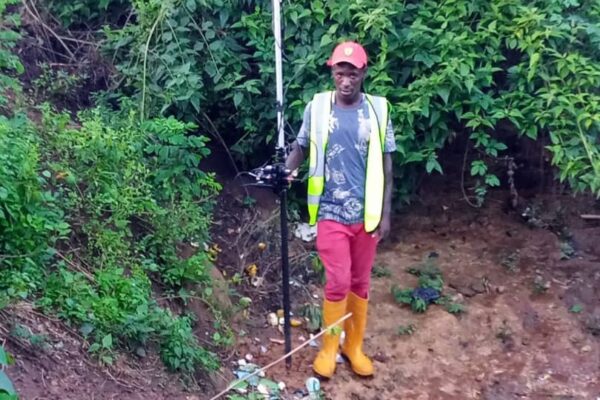
- Topographic Surveys By combining GIS with GPS and remote sensing, Geospatial Research Ltd generates accurate topographic maps. These maps are essential for construction, agriculture, and hydrological studies, providing detailed elevation and terrain data.
- Infrastructure Planning GIS enables Geospatial Research Ltd to analyze spatial relationships and plan the placement of critical infrastructure such as roads, pipelines, and utilities. With tools for network analysis and spatial modeling, they streamline the process of designing efficient systems.
- Monitoring Land Use Changes Geospatial Research Ltd utilizes GIS to track and analyze land use changes over time. This is particularly important in urban expansion, deforestation monitoring, and conservation efforts, where understanding historical and current land use trends informs sustainable planning.
- Disaster Management and Risk Assessment With GIS, Geospatial Research Ltd assesses risks and plans mitigation strategies for natural disasters. Flood-prone areas, fault lines, and other hazards can be mapped with precision, helping communities prepare and respond effectively.

Advantages of GIS in Surveying
- Precision and Accuracy: GIS integrates data from multiple sources, enhancing the accuracy of maps and models.
- Time Efficiency: Automated tools in GIS reduce the time spent on manual data processing and analysis.
- Visualization: 3D modeling and interactive maps allow surveyors to present data in ways that are easy to interpret.
- Collaboration: Cloud-based GIS platforms enable real-time collaboration among stakeholders, improving project coordination.
The Future of GIS in Surveying
As technologies like AI, IoT, and drone-based surveying become mainstream, GIS will continue to evolve. Geospatial Research Ltd is well-positioned to embrace these advancements, ensuring surveyors are equipped with the latest tools to tackle complex
Challenges.
By harnessing the power of GIS, Geospatial Research Ltd is not just keeping pace with technological trends—it is redefining the boundaries of what’s possible in the surveying industry.